
Quick Take:
If all people begin equally dead in sin, what explains why mercy is given to one and not another?
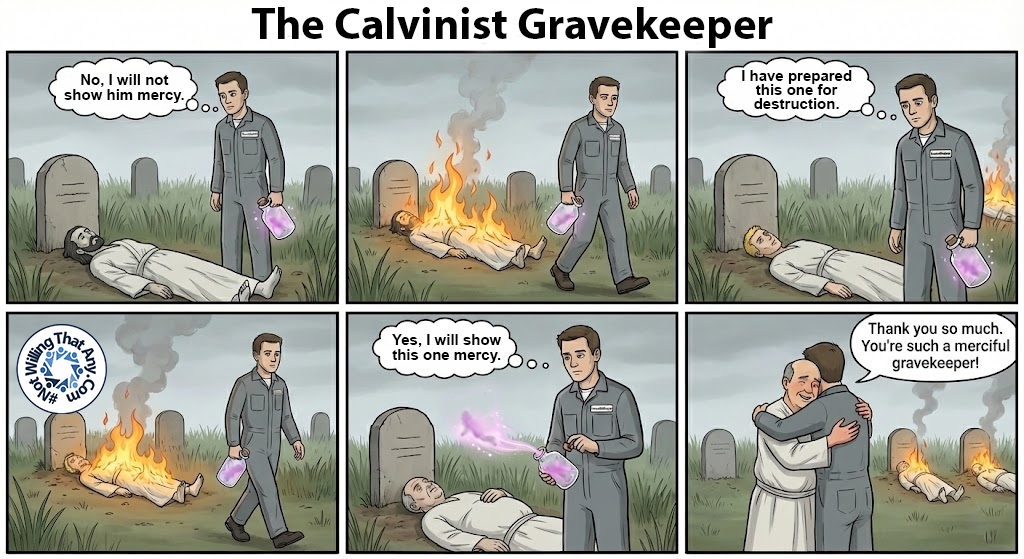
This illustration presses the Calvinist claim that salvation depends entirely on God’s sovereign choice rather than any difference in the sinner, even when the condition of all is the same. In Reformed theology, God is free to show mercy to whom He wills and to pass over others, not because of foreseen faith or response, but according to His hidden purpose (Romans 9:15–18). The tension raised is whether this understanding presents mercy as a universally offered rescue rejected by some, or as a selective act bestowed on certain individuals while others are left in their condemned state, even though Scripture repeatedly affirms God’s patience and desire that sinners turn and live (Ezekiel 18:23; 2 Peter 3:9).
This illustration was created in response to a Calvinist concern that earlier imagery using a doctor implied an obligation to heal. From a Calvinist perspective, that framing was rejected because doctors are morally bound to help the sick, while God is not obligated to save anyone. The gravekeeper image is meant to reflect that correction. All are already dead, judgment is deserved by all, and mercy is not owed to any. When mercy is given, it is an act of pure grace, not duty (Romans 11:5–6). By shifting from the medical setting to the graveyard, the illustration aims to present Calvinism on its own terms, where salvation is understood not as withheld aid from the wounded, but as undeserved life granted to the dead according to God’s sovereign will (John 5:21; Ephesians 2:4–5).
Is it an accurate picture of Calvinism?
If you are a Calvinist reading this, the purpose of this illustration is not to mock or misrepresent your theology, but to portray it as faithfully as possible according to how Calvinism actually understands salvation. The aim is careful accuracy rather than critique by exaggeration. Each element was chosen to reflect core Reformed commitments as they are commonly taught and defended within Calvinist theology, so that any evaluation rises or falls on whether the picture truly matches what you believe.
Total Depravity: The bodies lying lifeless represent the Calvinist view that all humanity is spiritually dead and equally unable to respond to God apart from grace (Ephesians 2:1–3).
Unconditional Election: The decision to revive one person and not another reflects the doctrine that God’s choice is not based on anything within the individual, but solely on His sovereign will (Romans 9:11–13).
Selective Mercy: The act of showing mercy to one corpse while passing over others aligns with the Calvinist belief that mercy is particular, not universal in intent, even though all deserve judgment (Romans 9:18; Exodus 33:19).
Divine Freedom: The gravekeeper’s internal deliberation reflects the Reformed emphasis on God’s absolute freedom to act according to His purposes without obligation to extend saving grace to all (Daniel 4:35).
Gratitude of the Redeemed: The rescued figure’s gratitude mirrors the Calvinist emphasis that salvation results in worship and praise precisely because it is undeserved and entirely God’s work (Ephesians 2:8–9; Romans 11:36).
If you recognize that this illustration does, in fact, reflect your theological commitments in a fair and careful way, the remaining question is an honest one: do you agree with the picture it presents? Does this portrayal align with how you understand God’s character, mercy, and redemptive purposes, and does it sit comfortably with the way you believe Scripture presents the heart of God? Why or why not?