
Quick Take:
Should the condition of the lost stir compassion in the heart of a Christ follower, or should it produce emotional distance?
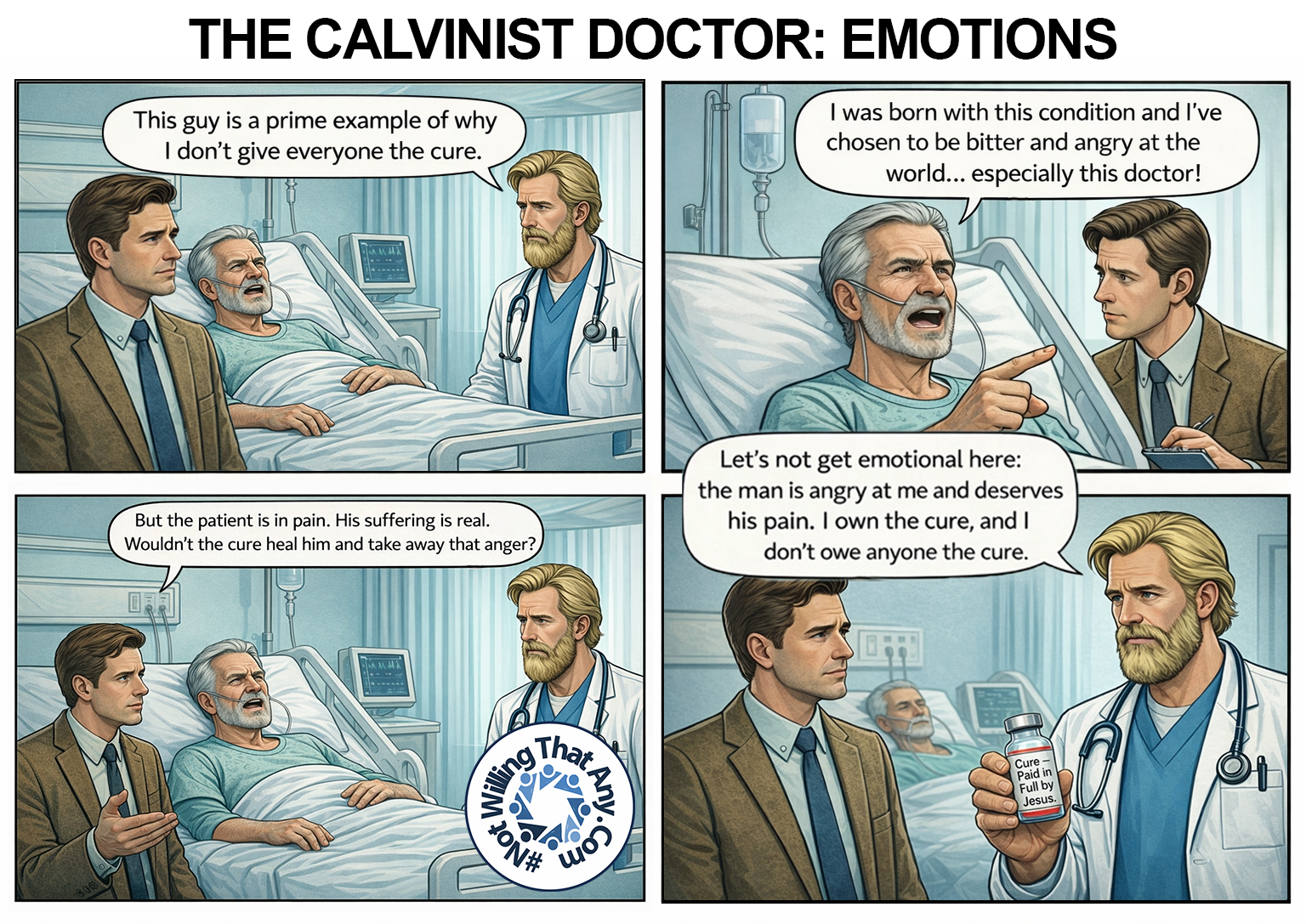
In this illustration, the patient’s anger and bitterness come from a condition he was born with, yet the doctor treats that anger as the reason to withhold the cure. The question the image raises is whether the broken condition of a person should move us toward mercy and healing, or whether it should lead us to stand back and say their suffering is deserved.
Is it an accurate picture of Calvinism?
The goal of this illustration is not to mock Calvinism, but to represent how its core ideas can appear when placed into a simple story. Like any analogy, it is imperfect. But it attempts to visualize the relationship between human inability, sinful behavior, and God’s sovereign choice in salvation.
Total Depravity:
In the illustration, the patient says he was born with this condition and now lives in bitterness and anger. This reflects the Calvinist doctrine of total depravity, which teaches that humans are born spiritually dead and unable to come to God on their own. Calvinists commonly appeal to passages like Ephesians 2:1 – “And you were dead in the trespasses and sins” – and Romans 3:10–11 – “None is righteous, no, not one; no one understands; no one seeks for God.” In the analogy, the patient’s condition represents this inherited spiritual inability.
Unconditional Election:
The doctor explains that he owns the cure and does not owe it to anyone. This reflects the Calvinist teaching that God sovereignly chooses whom He will save, not based on anything in the person. Calvinists often point to Romans 9:15–16 – “I will have mercy on whom I have mercy” – and Ephesians 1:4–5, which speaks of believers being chosen before the foundation of the world. In the story, the doctor’s control over the cure symbolizes God’s sovereign freedom in election.
Irresistible Grace:
The bottle labeled “Cure – Paid in Full by Jesus” represents the atoning work of Christ applied to those whom God chooses. Calvinists argue that when God gives this grace, it effectively brings the person to salvation. They often reference John 6:37 – “All that the Father gives me will come to me” – and John 6:44, which says no one can come unless the Father draws him. In the analogy, the cure represents this saving grace that heals the condition.
The illustration then asks the reader to think about the emotional and moral tension created by these ideas when placed together. If a person’s sinful behavior flows from a condition they were born with and cannot overcome, does it make sense to treat that behavior as the reason to withhold the cure that would heal them? And if this analogy accurately reflects the internal structure of Calvinist theology, does that picture align with the character of God revealed in Scripture, or does it raise questions about how responsibility and mercy fit together?