
Quick Take:
Is it an accurate picture of Calvinism?
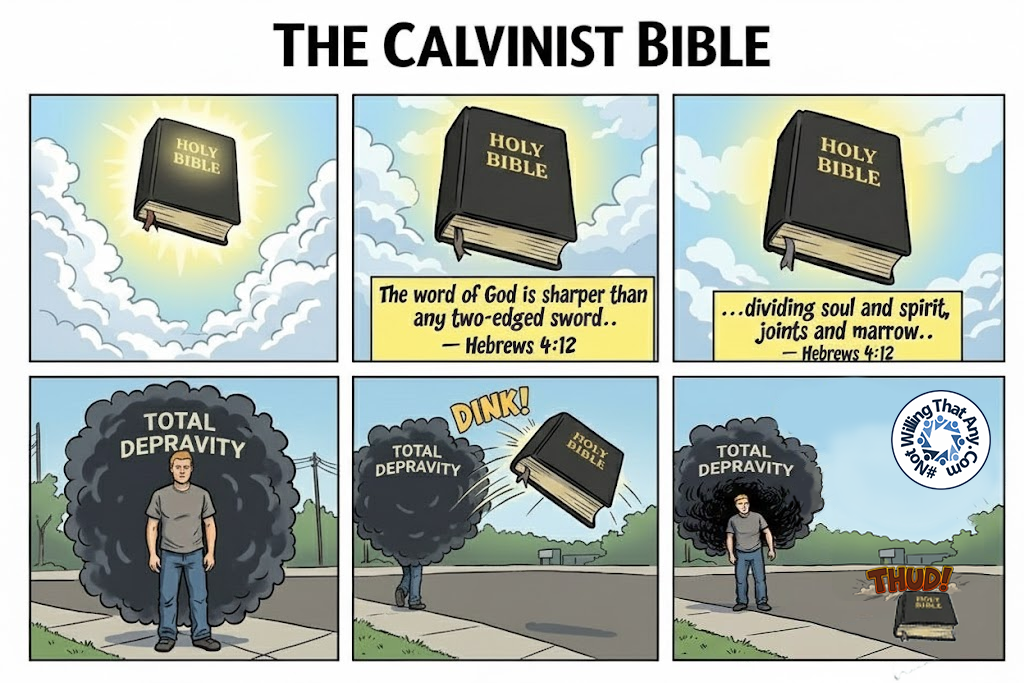
The aim of this illustration is accuracy rather than caricature. It is intended to depict how Calvinist theology understands the relationship between Scripture, human inability, and saving grace when its doctrines are applied consistently. The issue is not whether the imagery feels sharp, but whether it faithfully represents the system’s own claims.
Total Depravity: The dark cloud surrounding the person represents the Calvinist claim that sin affects every aspect of human nature, leaving the sinner spiritually dead and unable to respond savingly to God’s Word apart from grace (Romans 3:10–18; Ephesians 2:1).
Moral Inability: The Bible striking the cloud without effect illustrates the doctrine that fallen humanity lacks the capacity to receive or embrace Scripture in faith prior to regeneration. The Word may be heard and understood externally, yet it cannot be savingly received by the natural person (1 Corinthians 2:14; John 3:3).
Revelation vs. Efficacy: Calvinism affirms that Scripture truly reveals God’s truth and is sharp, authoritative, and clear, while simultaneously denying that revelation itself has saving efficacy unless accompanied by effectual grace. The illustration shows revelation present but non-decisive (Romans 8:7–8; Hebrews 4:12).
Sovereign Grace: Salvation depends entirely on God’s initiative rather than human response. The image reflects the Calvinist insistence that grace must overcome inability rather than appeal to it, preserving divine sovereignty in the saving act (John 6:37; Philippians 1:29).
God-Centered Salvation: By making human inability the controlling factor and divine action the sole solution, the illustration aligns with the Calvinist emphasis that salvation exists to magnify God’s power and glory rather than human decision or cooperation (Ephesians 1:5–6).
Taken together, the illustration does not deny the truth, authority, or clarity of Scripture. It portrays how, within Calvinism, the Word of God remains ineffective for salvation unless preceded by regenerating grace.
The remaining question, then, is this: if this reflects Calvinism accurately, is this the theological vision you can stand behind?