
Quick Take:
QUICK TAKE: Where does mercy end in Calvinism?
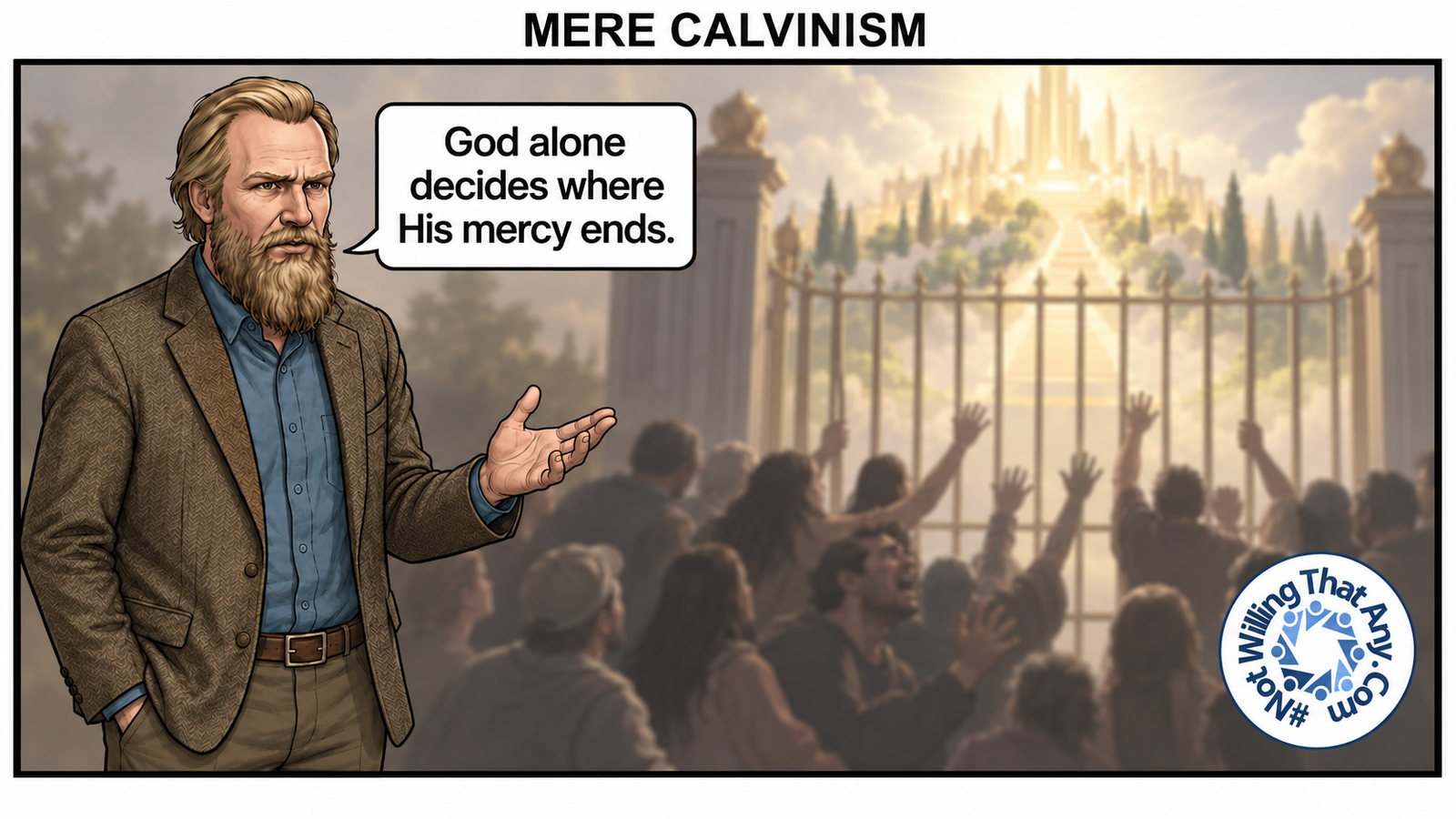
Calvinism teaches that God is fully able to save all people, yet He chooses to save only the elect. This illustration is meant to press on that idea and ask whether the limit on saving mercy comes from man, or from God’s own choice.
Is it an accurate picture of Calvinism?
Full Analysis:
This illustration is not meant to mock Calvinism or turn it into a straw man. It is trying to picture the system as Calvinists themselves describe it: God is sovereign, man is unable to save himself, and God chooses whom He will save. The question is whether the picture feels troubling because it is unfair—or because it accurately shows where the system leads.
Total Depravity: Calvinism teaches that fallen man cannot come to Christ unless God first enables him. Jesus’ words, “No one can come to me unless the Father who sent me draws him” (John 6:44), are often used to support this. In the illustration, the people behind the gate cannot simply walk through on their own. They need God to do something for them first.
Unconditional Election: Calvinism teaches that God chooses certain people for salvation apart from anything He sees in them. Romans 9:15 says, “I will have mercy on whom I have mercy.” In the illustration, God alone decides who receives the mercy needed to enter. The gate is not closed because God lacks power to open it, but because His choice determines who receives saving mercy.
Irresistible Grace: Calvinism teaches that when God gives saving grace to the elect, that grace will successfully bring them to faith. Jesus says, “All that the Father gives me will come to me” (John 6:37). This means the people God chooses to save will come, while those not given that grace remain unable to enter. The key difference between the two groups is ultimately God’s decision to give saving grace to one and not the other.
Note: The people reaching toward heaven are intentional. Calvinists may object that totally depraved people would not naturally seek God, but Scripture does show the lost crying out for relief once judgment is experienced. In Jesus’ account of the rich man and Lazarus, the rich man cries, “Have mercy on me” and asks for relief from his torment (Luke 16:24). That does not mean he is showing saving faith or repentance. It simply shows that a condemned person can desperately desire mercy and escape from judgment. The illustration is picturing that same kind of anguish.
Non-Calvinists who hold a high view of Scripture read these passages differently. They believe God truly desires the salvation of all, Christ genuinely provides for all, and people can resist God’s gracious call. They would point to texts like John 3:16, 1 Timothy 2:4, and 2 Peter 3:9 and argue that the lost remain outside because they refuse God’s offered mercy, not because God chose not to make saving mercy available to them. If the illustration feels troubling, it may be worth asking which part troubles you? Could another faithful reading of Scripture better explains both God’s sovereignty and His genuine desire for people to be saved.