
Quick Take:
If God’s mercy is part of who He is, can we treat that mercy as something He may simply choose not to offer?
Jonah knew God as “gracious and merciful” (Jonah 4:2), yet the Calvinist system strongly stresses that God owes mercy to no one and may pass over many while saving others. Jonah 4 raises an interesting question: is God’s pity toward sinners merely an optional act of sovereignty, or does it reveal something deeper about His character?
Is it an accurate picture of Calvinism?
Full Analysis:
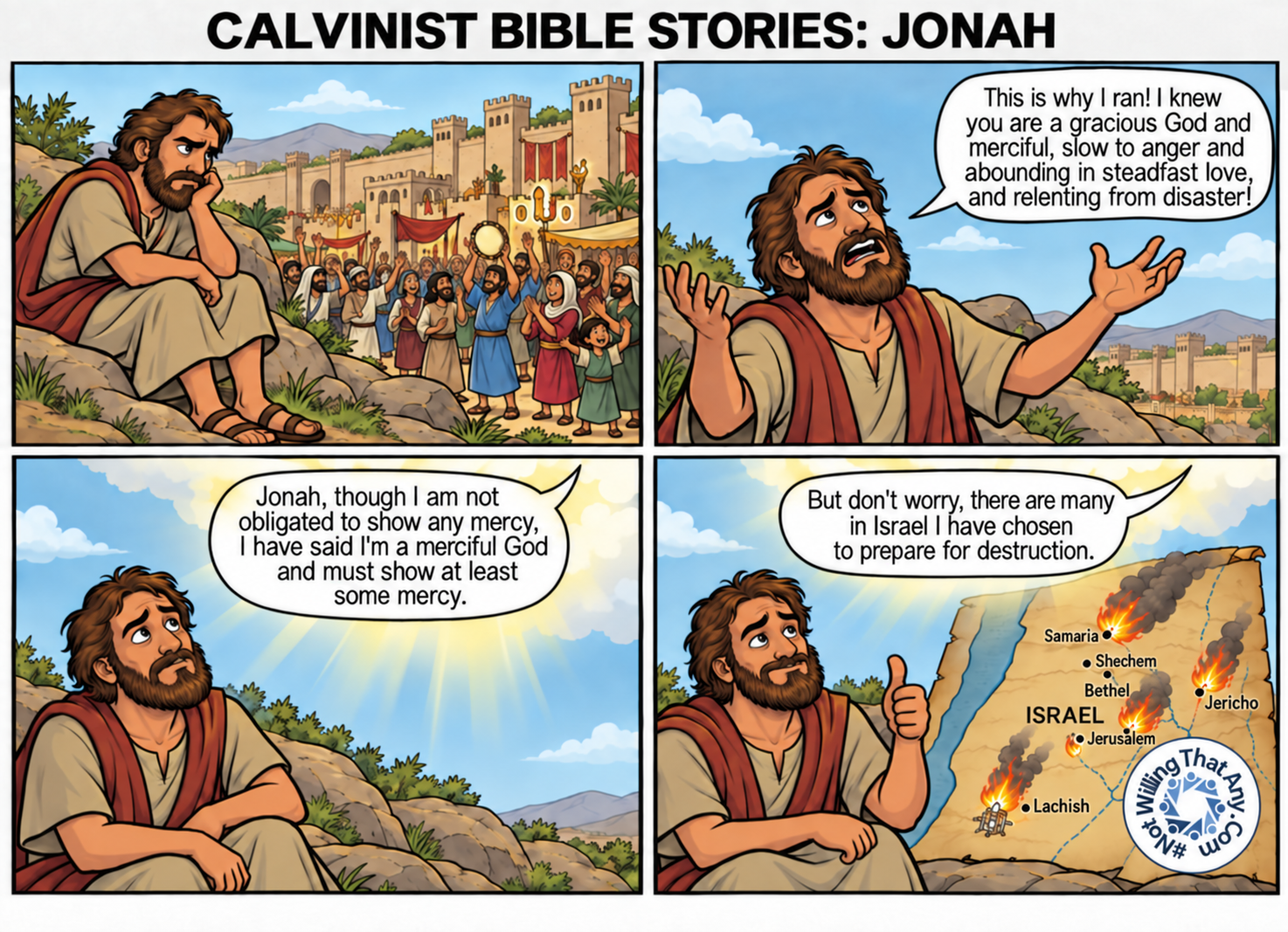
This illustration is not meant to mock Calvinism or suggest Calvinists believe God is cruel. Calvinists strongly affirm that God is good, loving, merciful, and perfectly just. The comic simply places several common Calvinist claims into Jonah’s mouth and then asks how those claims fit with God’s own explanation of His compassion for Nineveh.
Unconditional Election: Calvinism teaches that God is not obligated to save anyone and freely chooses whom He will save. Romans 9:15 is often central: “I will have mercy on whom I have mercy.” Jonah’s argument in the comic follows that logic: if mercy is not owed, then God would remain perfectly just even if He chose not to extend saving mercy to Nineveh.
Limited Atonement: Calvinism teaches that Christ’s saving work was especially intended to secure the salvation of the elect rather than make salvation equally available to every person. Passages such as John 10:15—“I lay down my life for the sheep”—are often used to support this idea. The comic presses the related question: if God may withhold saving mercy from some people, why does God Himself appeal to His pity for a wicked and undeserving city?
Irresistible Grace: Calvinism teaches that when God decides to save someone, His saving grace will finally bring that person to faith. John 6:37 says, “All that the Father gives me will come to me.” That means God could have left Nineveh in rebellion, yet instead He sent warning, truth, and an opportunity to repent. The illustration asks why God’s compassion toward Nineveh seems so important to His explanation of His actions.
The non-Calvinist sees these passages differently. God is never obligated to show mercy, but that does not mean His merciful character is meaningless or optional. Jonah 4:11 ends with God asking, “Should not I pity Nineveh?” His compassion helps explain why He warned them rather than simply destroying them. Faithful Bible teachers with a high view of Scripture also understand Romans 9 as defending God’s sovereign freedom in carrying out His purposes without teaching that He withholds any genuine opportunity for salvation from most people. The question worth considering is whether this reading better holds together both God’s sovereign right to judge and His repeated desire to show mercy to sinners.