
Quick Take:
What if you were born… hated?
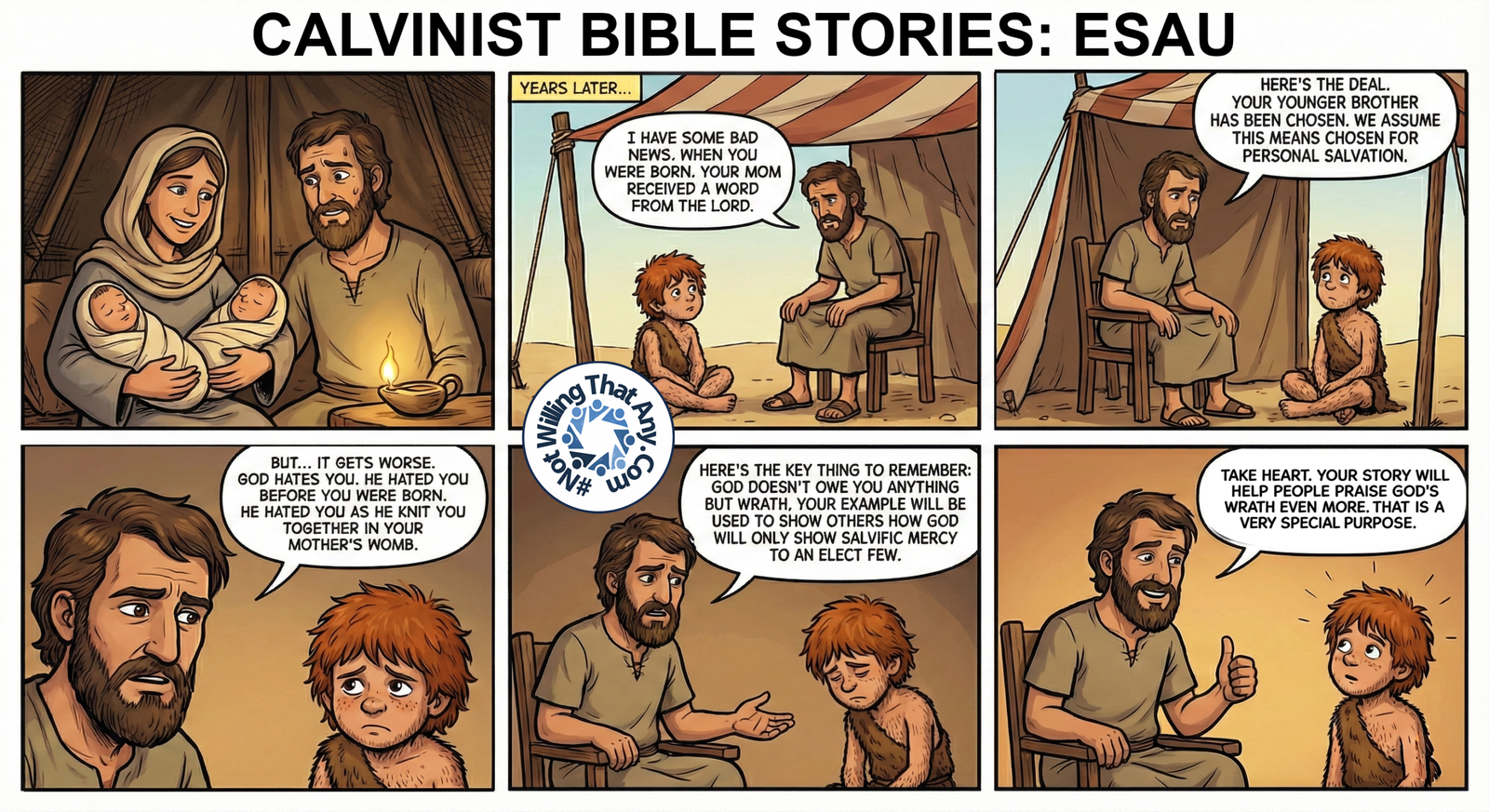
Imagine knowing that before you were born, God had already decided to hate you and never show you mercy. Every prayer, every hope of forgiveness, and every desire to be saved would seem meaningless. That is why many people find this portrayal troubling. The Bible presents God as loving the world and sincerely calling all people to come to Him. (John 3:16; 1 Timothy 2:4; 2 Peter 3:9)
Is it an accurate picture of Calvinism?
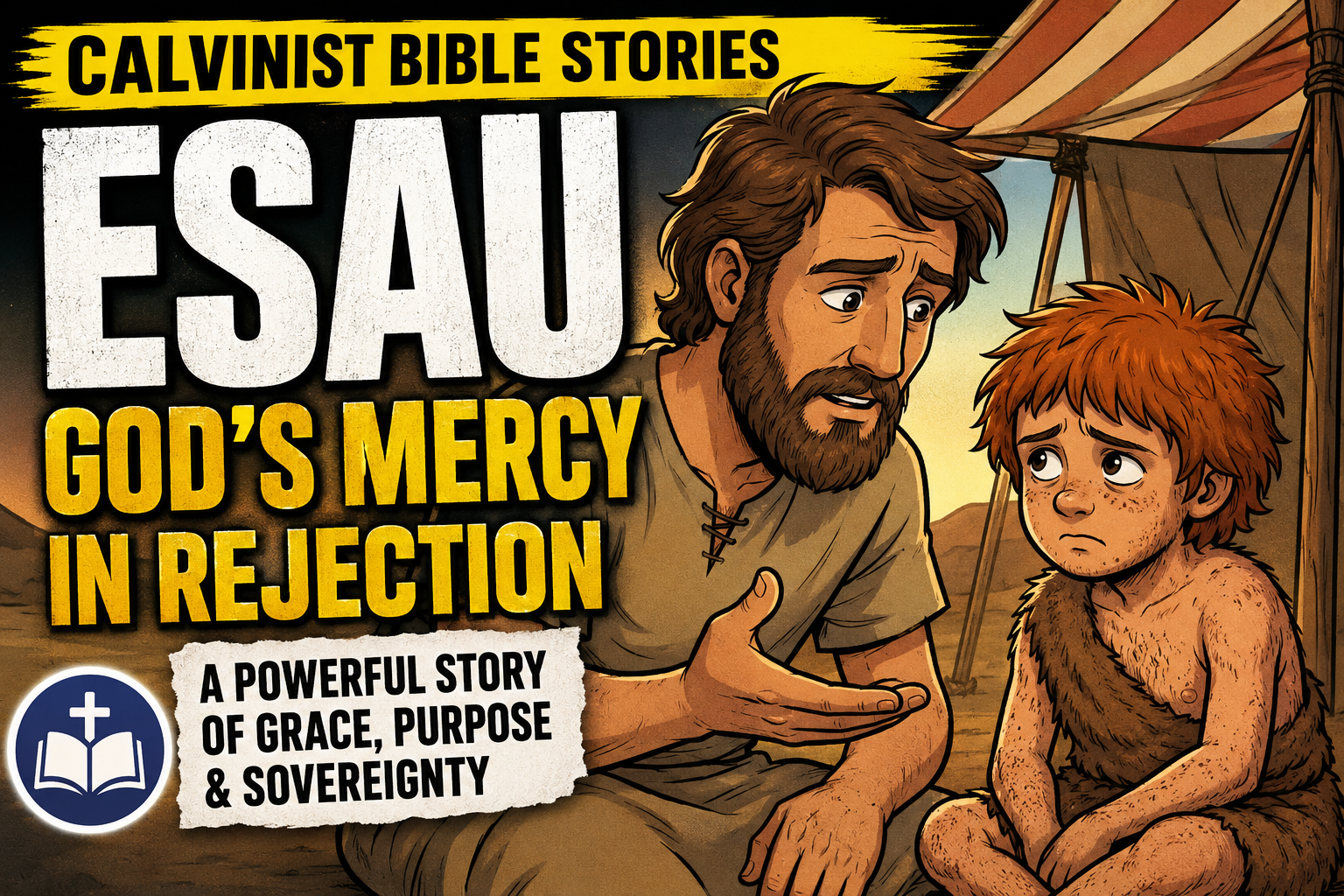
This illustration is intentionally satirical, but it does attempt to represent key Calvinist doctrines as many Calvinists themselves understand them. Before criticizing a position, it is important to understand it accurately. While Calvinists would likely object to the tone and conclusions of the comic, several of its central ideas do reflect major points of Calvinist theology.
1. Unconditional Election (U in TULIP)
The illustration portrays Esau’s destiny as being determined before his birth rather than by anything he would later do. Calvinists teach that God’s choice of the elect is not based on foreseen faith, works, or decisions, but solely on His sovereign will. Romans 9 is commonly cited in support of this view, especially the statement that God’s purpose in election was established “though they were not yet born and had done nothing either good or bad” (Romans 9:11-13).
2. Total Depravity (T in TULIP)
The comic assumes that Esau has no ability to change his condition or turn himself toward God. This aligns with the Calvinist doctrine of Total Depravity, which teaches that fallen humanity is spiritually unable to come to God apart from divine intervention. Calvinists commonly appeal to passages such as John 6:44 and Romans 3:10-12 to argue that sinners cannot respond positively to God unless God first acts upon them.
3. Limited Atonement (L in TULIP)
The illustration suggests that God’s saving mercy is intended only for a particular group rather than for every individual. While Calvinists usually express this more carefully than the comic does, they do teach that Christ’s atoning work was specifically designed to secure salvation for the elect. Passages often cited include John 10:11, 15, where Christ lays down His life for His sheep, and Matthew 1:21, which says He will save His people from their sins.
A Final Thought
Whether you believe this illustration is fair or unfair, it raises an important question. If these ideas accurately represent Calvinism, do they also accurately represent the character of God revealed throughout Scripture? As you read the Bible, consider not only God’s sovereignty and justice, but also His love for the world, His compassion toward sinners, and His desire that people come to repentance (John 3:16; Ezekiel 33:11; 2 Peter 3:9). The ultimate question is not whether a doctrine is logical, but whether it faithfully reflects the God who has revealed Himself in His Word.