
Quick Take:
What is worthy of worship?
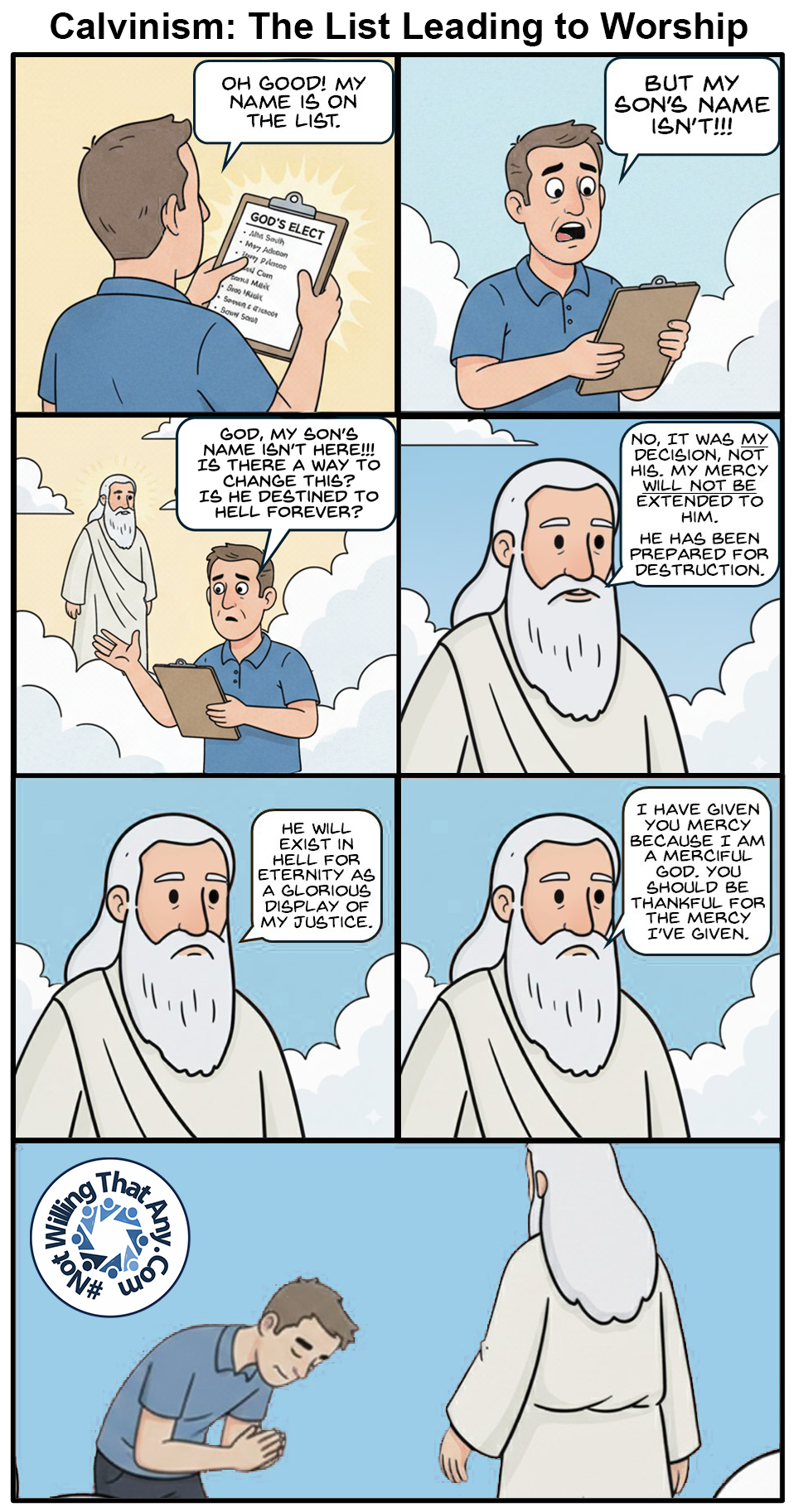
That is the question this illustration is asking the viewer to consider. It invites the Calvinist to think not just about whether a doctrine can be stated or defended, but about what kind of reality calls forth praise from the heart. In this scene, worship is connected to the character of God, the meaning of mercy, and the reason a person would bow before Him with genuine adoration. The question is whether what is being shown here is the kind of thing that naturally leads the soul to say, “This is good. This is beautiful. This is worthy of worship.”
Is it an accurate picture of Calvinism?
This illustration is meant to raise a serious question, not just to provoke emotion. It takes ideas Calvinists really do believe and places them in a very personal moment. That matters, because doctrines are not only things to define. They also shape the way we see God, mercy, judgment, and worship.
Unconditional Election: The list in the illustration points to the Calvinist belief that God chooses whom He will save based on His own will, not on anything in the person. Calvinists often connect this to passages like Ephesians 1:4-5 and Romans 9:11-16. The illustration brings that belief into a family setting by showing a father who finds his own name on the list, but not his son’s.
Reprobation: The statements about mercy not being extended and the son being destined for destruction reflect the Calvinist teaching that some are passed over and left in their sin under judgment. Calvinists often connect this with Romans 9:22 and similar texts. The illustration is asking the viewer to think about what that teaching means when it is not just about “the non-elect” in general, but about someone deeply loved.
Glory in Justice and Mercy: The claim that the son will display God’s justice forever points to the Calvinist idea that God is glorified both in saving sinners and in judging sin. Calvinists often appeal to Romans 9:22-23 and Proverbs 16:4 here. The final panel then connects worship to gratitude for personal mercy, asking whether this picture of justice and mercy is one that leads to wholehearted worship.
The main question of the illustration is whether this picture of God is truly worthy of worship. Not just whether it can be defended as a system, but whether it presents something the heart can recognize as good, beautiful, and fitting. If this is a fair picture of Calvinist theology, does it lead to the kind of worship that matches the character of God revealed in Scripture?