
Quick Take:
When you read the Bible’s invitations, do they sound like real opportunities or like commands people are born unable to experience?
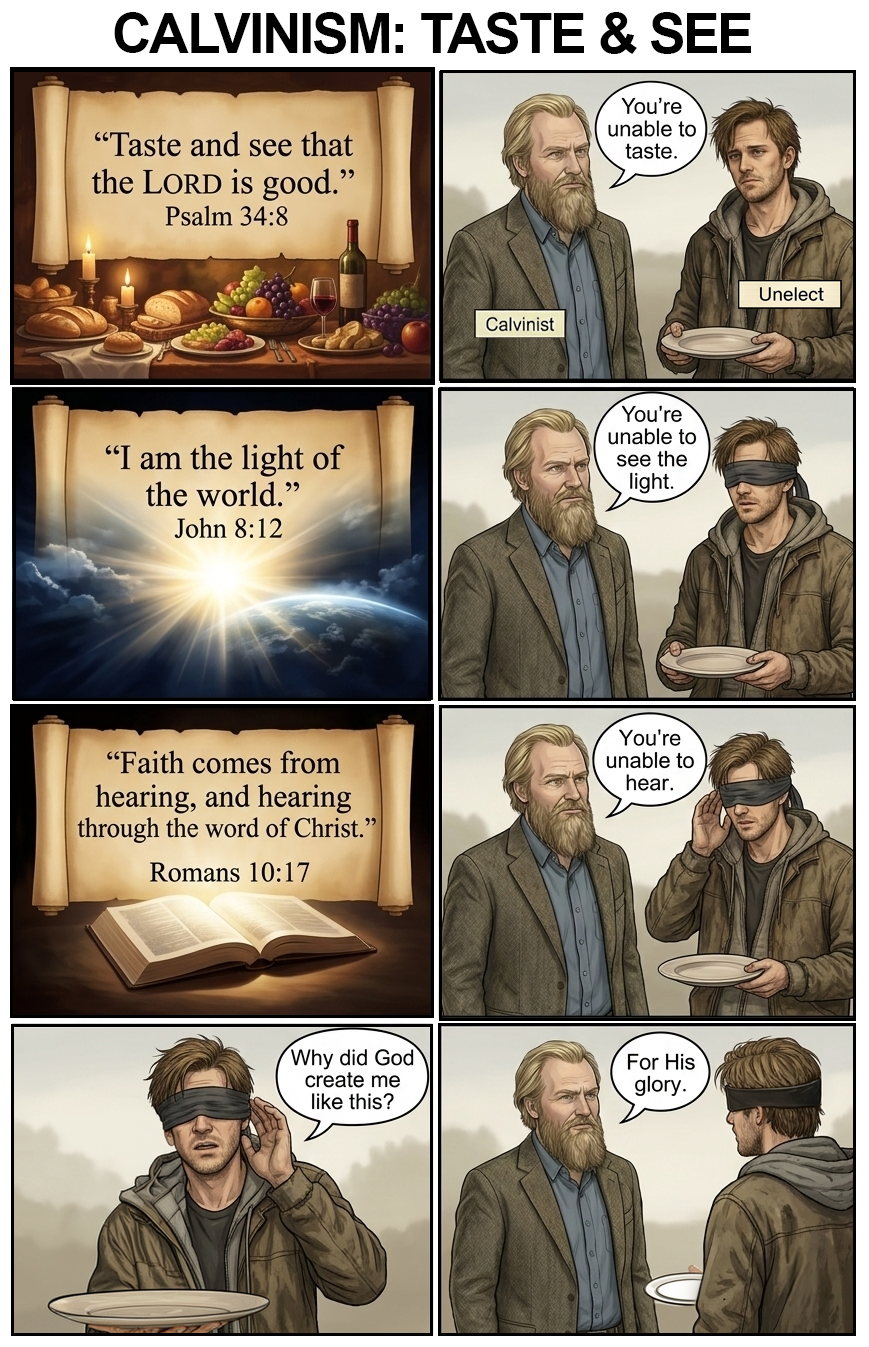
Scripture repeatedly calls people to taste, see, and hear the goodness of God. Yet in this illustration, the unelect man is told he cannot taste the feast, cannot see the light, and cannot hear the word. The question raised is simple: if these invitations are directed to people who are born unable to experience them, what purpose do they serve for those individuals?
Is it an accurate picture of Calvinism?
This illustration is not meant to mock Calvinism but to honestly represent how certain doctrines within the system can appear when placed next to the language of Scripture. Calvinists emphasize God’s sovereignty and human inability, while critics often ask how those ideas fit with the Bible’s many invitations. The comic simply places those two elements side by side.
Total Depravity:
In Calvinist theology, fallen humanity is born morally unable to respond to God apart from divine intervention. Passages such as Romans 3:11 and John 6:44 are often cited to argue that people cannot seek God or come to Christ on their own. In the illustration this inability is represented by the man who cannot taste the feast, cannot see the light, and cannot hear the word.
Irresistible Grace:
Within the Calvinist framework, God grants new life to the elect before they can believe. This regeneration enables them to see, hear, and respond to the gospel. Texts such as John 6:37 and Acts 13:48 are frequently used to support the idea that only those whom God specifically enables will ultimately respond. In the comic, however, the unelect man never receives that enabling grace, so the invitations remain inaccessible to him.
Unconditional Election:
Calvinism also teaches that God chooses who will receive saving grace before the foundation of the world, not based on anything in the individual. Ephesians 1:4–5 and Romans 9 are often used to explain this teaching. The final panel reflects this perspective by presenting the explanation that everything ultimately serves God’s glory, even the condition of those who never receive the ability to respond.
The question raised by the illustration is not whether God is sovereign, but whether the picture created by these doctrines aligns naturally with the Bible’s invitations. When Scripture calls people to taste the goodness of God, to see the light, and to hear the word, it sounds like those invitations are meant to be genuinely accessible. The illustration invites the viewer to consider whether the Calvinist explanation fits comfortably with those passages or whether another understanding of human response might better reflect the intent of those invitations.