
Quick Take:
Is it an accurate picture of Calvinism?
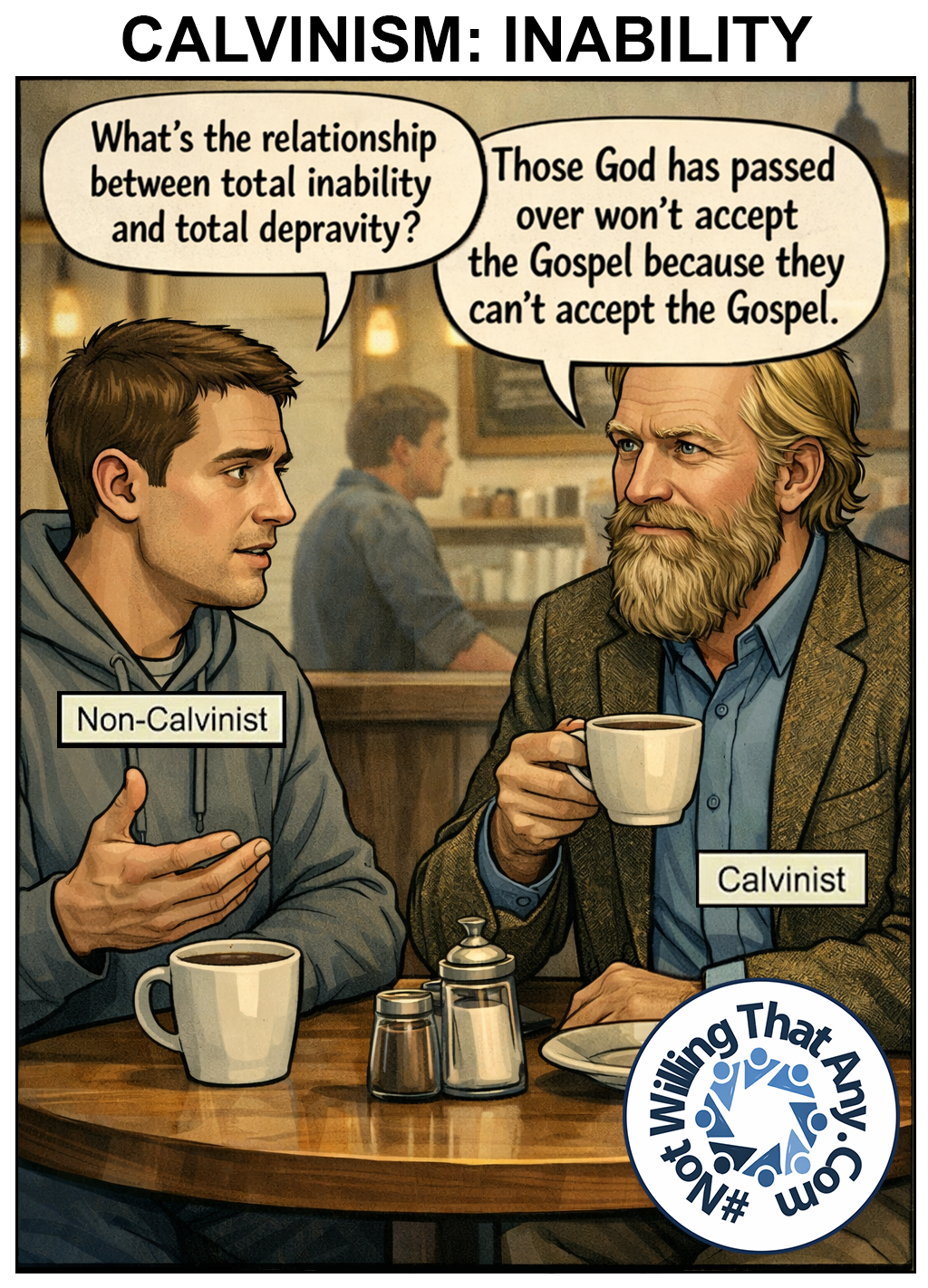
This illustration is meant to fairly show how Calvinism connects total depravity and total inability. It is not saying Calvinists think people are as sinful as possible in every action. It is showing the Calvinist belief that man’s fallen condition is so deep that, apart from God’s special saving work, no one can truly come to Christ.
Total Depravity: In Calvinism, total depravity means sin has reached every part of man. The mind, will, desires, and affections are all affected by the fall. That is why Calvinists often point to passages like Romans 3:10 to 11, Ephesians 2:1 to 3, and Jeremiah 17:9. The point is not that man is always as bad as he could be, but that he is fallen all the way through.
Total Inability: From that, Calvinism concludes total inability. If man is dead in sin and does not seek God, then he cannot believe the Gospel on his own. Calvinists often connect this idea to John 6:44, Romans 8:7 to 8, and 1 Corinthians 2:14. In this view, the sinner does not merely choose not to come. He cannot come unless God first gives life and changes the heart.
The Relationship: That is the main point of the illustration. Total inability is shown as the result of total depravity. The Calvinist in the picture is saying that those passed over by God will not accept the Gospel because their fallen nature leaves them unable to accept it. So in Calvinist thought, inability is not separate from depravity. It grows out of it.
The question the picture leaves with the reader is this: can you consistently read this understanding of inability across the rest of the Bible? If this is what Calvinism teaches, does it fit the way Scripture speaks about man, sin, and God’s calls to repent and believe?