
Quick Take:
Is it an accurate picture of Calvinism?
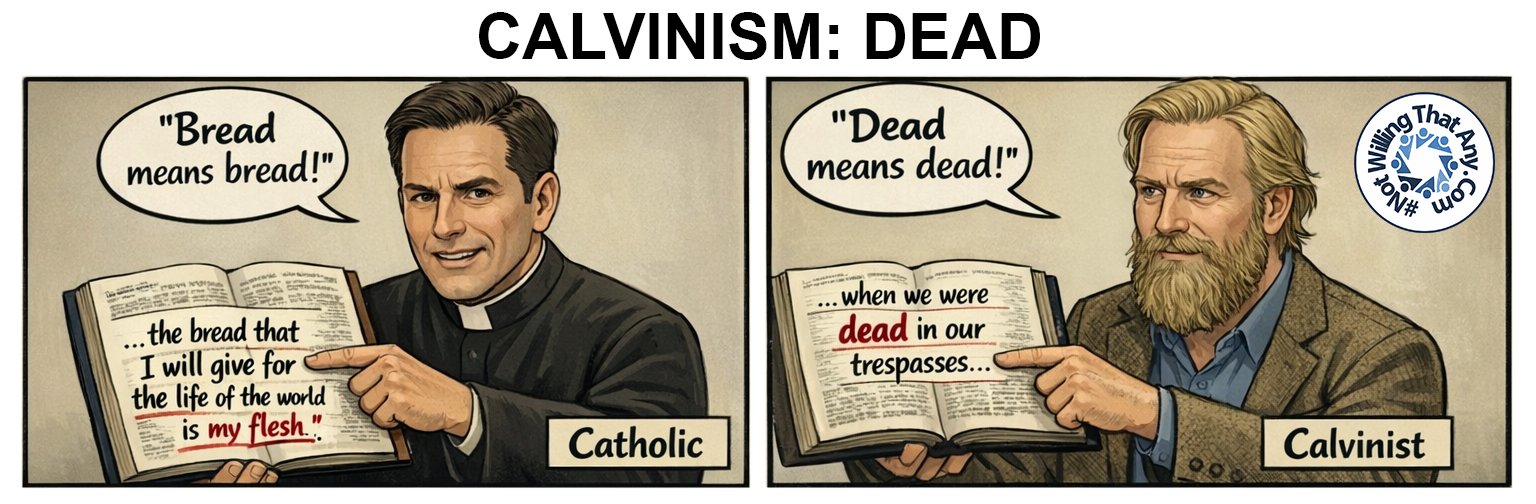
This illustration is meant to fairly represent a concern about how Calvinism understands the word “dead,” while also comparing it to another theological example. The goal is not to mock, but to ask whether a word picture is being pressed too far beyond its intent.
Total Depravity: In the image, the Calvinist says, “Dead means dead,” pointing to Ephesians 2:5. Calvinists often use passages like Ephesians 2:1 and 1 Corinthians 2:14 to argue that people are unable to respond to God on their own. The illustration shows how this view treats “dead” as complete inability, like a lifeless body.
Nature of Death in Scripture: The comparison to the Catholic use of “bread” raises a key question. In Scripture, death often means separation. Adam was told he would die the day he ate the fruit, yet he continued living physically (Genesis 2:17). The prodigal son was called “dead” and then “alive again” (Luke 15:24), even though he was clearly able to think and return. These examples suggest that “death” can describe a broken relationship rather than total unresponsiveness.
Implication for Response: If “dead” means separation, then a person can still hear, understand, and respond when God reaches out. Passages like John 12:32 and Acts 17:27 show God drawing and calling people to respond. The illustration asks whether interpreting “dead” as total inability goes beyond what the metaphor is meant to teach.
When you read passages about spiritual death across the Bible, could your interpretation of the word “dead” be taking the metaphor further than Scripture intends?