
Quick Take:
Is it an accurate picture of Calvinism?
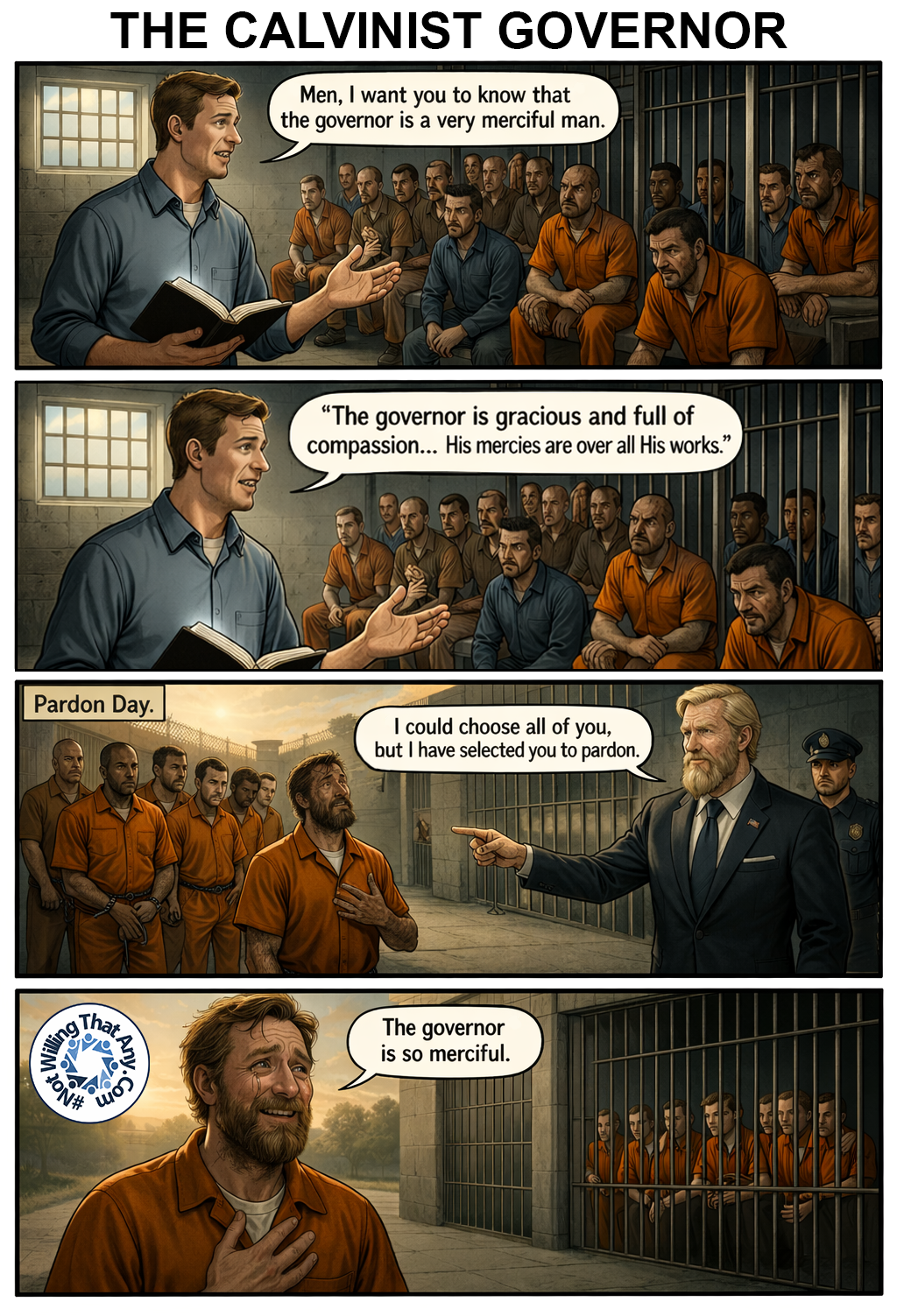
This illustration is meant to represent Calvinism accurately. It shows a governor who is described as merciful to all (which Calvinists affirm generally), yet chooses to pardon only one person from a group of condemned prisoners (or salvific mercy). The chaplain speaks in universal terms, even echoing Psalm 145:8–9, which says God’s mercy is over all His works. Calvinists often speak of God’s universal general mercy, but limited salvific mercy. What this illustration does is a juxtaposition of those two affirmed truths.
Total Depravity: The prisoners on death row reflect the idea that all people are guilty and deserving of judgment (Rom. 3:10–12). In Calvinism, no one deserves mercy, so the fact that any are pardoned at all is considered an act of grace. The illustration captures this by showing all ten prisoners equally condemned with no claim to rescue.
Unconditional Election: The governor’s choice of one prisoner represents the idea that God chooses individuals for salvation not based on anything in them (Eph. 1:4–5; Rom. 9:15–18). The statement, “I could choose all of you, but I have selected you,” mirrors the concept that election is not universal but particular and based on God’s will alone.
Limited Atonement (or Particular Redemption): Only one prisoner is actually pardoned, which parallels the Calvinist view that Christ’s atoning work is specifically effective for the elect (John 10:11, 15). The mercy described does not result in the salvation of all, but only those chosen.
Irresistible Grace: The chosen prisoner does not resist the pardon. He receives it fully and responds with gratitude, reflecting the belief that those whom God chooses will certainly come and respond (John 6:37, 44). His response, “The governor is so merciful,” shows the transformed perspective of one who has received grace.
Perseverance of the Saints: While not strongly emphasized, the pardoned prisoner’s gratitude and changed outlook hint at the idea that those who are saved will continue in that state, recognizing and affirming the mercy they have received (Phil. 1:6).
The tension in the illustration centers on the definition of mercy. The governor is described in universal terms, yet acts in a limited way. The visual contrast between the one pardoned and the nine remaining highlights this question: can mercy be meaningfully described as extending to all if it is only applied to some?
As you think through this, consider this question: when you read about God’s mercy in passages like Psalm 145 or Jonah, do you naturally understand that mercy as broadly extended to all, or as something expressed primarily through selective rescue?