
Quick Take:
Is it an accurate picture of Calvinism?
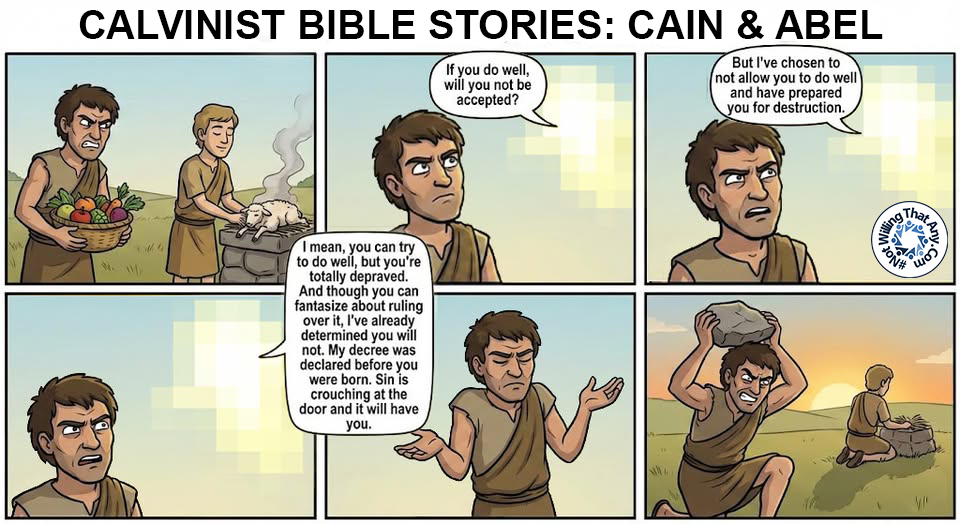
This illustration is meant to accurately represent Calvinism, not exaggerate it. It is trying to show what happens when a Calvinist understanding of Romans 9 is carried into other parts of Scripture. It starts with Cain and Abel because Genesis 4 is a simple and personal story where God warns Cain and calls him to do what is right. The illustration is asking how that kind of passage would be read when viewed through the same lens.
Total Depravity: In Calvinism, Cain can be seen as an example of fallen man. God’s warning is real, but Cain, like all sinners, would still be unable to respond rightly apart from special grace. Calvinists often connect this idea to passages like Romans 3:11, 1 Corinthians 2:14, and John 6:44. So in this illustration, Cain’s failure fits the Calvinist belief that man is morally unable to come to God on his own.
Unconditional Election: The difference between Cain and Abel can also connect to the Calvinist belief that the deepest difference between people is God’s choice, not something found in them. Calvinists often connect this to Romans 9:10-18 and Ephesians 1:4-5. In that way, the illustration shows how a Calvinist may read even an early Bible story through the larger pattern of God choosing one and not another.
Irresistible Grace: Calvinism also teaches that when God truly intends to save someone, He does more than warn or invite. He gives the grace that brings that person to faith. Calvinists often point to John 6:37, Acts 16:14, and Romans 8:30 here. The illustration connects to this by showing that God’s outward words to Cain are not the same as the inward saving grace Calvinists believe God gives only to the elect.
So the question this leaves with the reader is this: Can I consistently read a Calvinist understanding of Romans 9 and apply it throughout the Bible? When I look at this illustration, does it make sense? Can it be true?