
Quick Take:
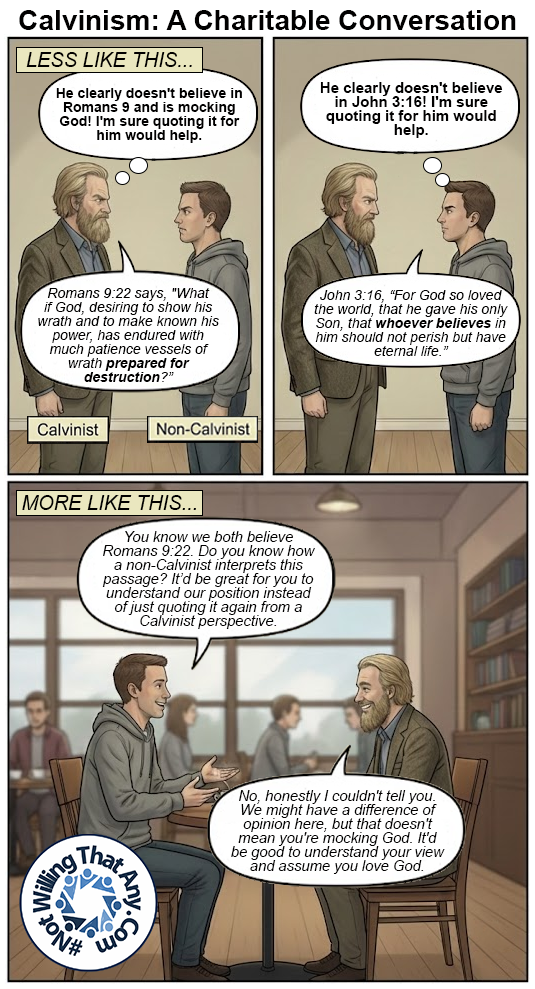
This illustration asks a simple but important question: When we talk about Calvinism, are we trying to win an argument, or are we trying to understand a brother?
It shows how quickly theological conversations can slide into suspicion and accusation, and how much healthier they become when both sides slow down, assume good faith, and actually listen before responding.
A Clarifying Observation:
This illustration is not arguing that doctrine does not matter. It is arguing that how we talk about doctrine matters. In the top panels, both men assume the worst. Each believes the other is denying Scripture or even mocking God. That assumption shapes everything that follows. Instead of dialogue, the conversation becomes a Scripture duel. The lower panel models a better starting point: assuming the other person loves God and is trying to be faithful, even if they interpret a passage differently.
Scripture Quoting vs. Scripture Engaging
Quoting Scripture is good. Using Scripture as a weapon is not. In the top panels, Romans 9 and John 3 are quoted correctly, but not thoughtfully engaged. Each man assumes that quoting his verse settles the issue. In the bottom panel, the conversation changes. Both agree on the authority of Romans 9:22, but one asks how the other understands it. That shift from assertion to curiosity is key. It reflects passages like Proverbs 18:13, which warns against answering before listening, and James 1:19, which calls believers to be quick to hear and slow to speak.
Avoiding Accusations About Motives
One of the biggest breakdowns in Calvinism discussions is the rush to judge motives. Accusations like “you deny Scripture,” “you don’t really believe God is sovereign,” or “you’re mocking God” shut down conversation immediately. This illustration highlights how damaging those assumptions are. The better model explicitly rejects motive-judging. Disagreement does not automatically mean rebellion, unbelief, or irreverence. Romans 14:4 reminds us that believers answer to the Lord, not to one another’s suspicions.
Charity Does Not Mean Compromise
The bottom panel does not show agreement. It shows respect. Both men still hold their views, but they refuse to caricature each other. Charity does not require surrendering convictions. It requires honesty, patience, and humility. Ephesians 4:15 calls believers to speak the truth in love, not instead of truth, but alongside it. Real theological clarity grows best in an atmosphere of trust.
A Question Worth Sitting With
If this illustration reflects a healthier way to discuss Calvinism, the question becomes personal rather than theoretical. Are we willing to assume the best about those who disagree with us? Or do we feel safer assigning bad motives than doing the harder work of listening? If charity reveals the real strength of a position, what does our tone say about how confident we actually are?