
Quick Take:
How should a Calvinist father react to the news that his son is not one of the elect?
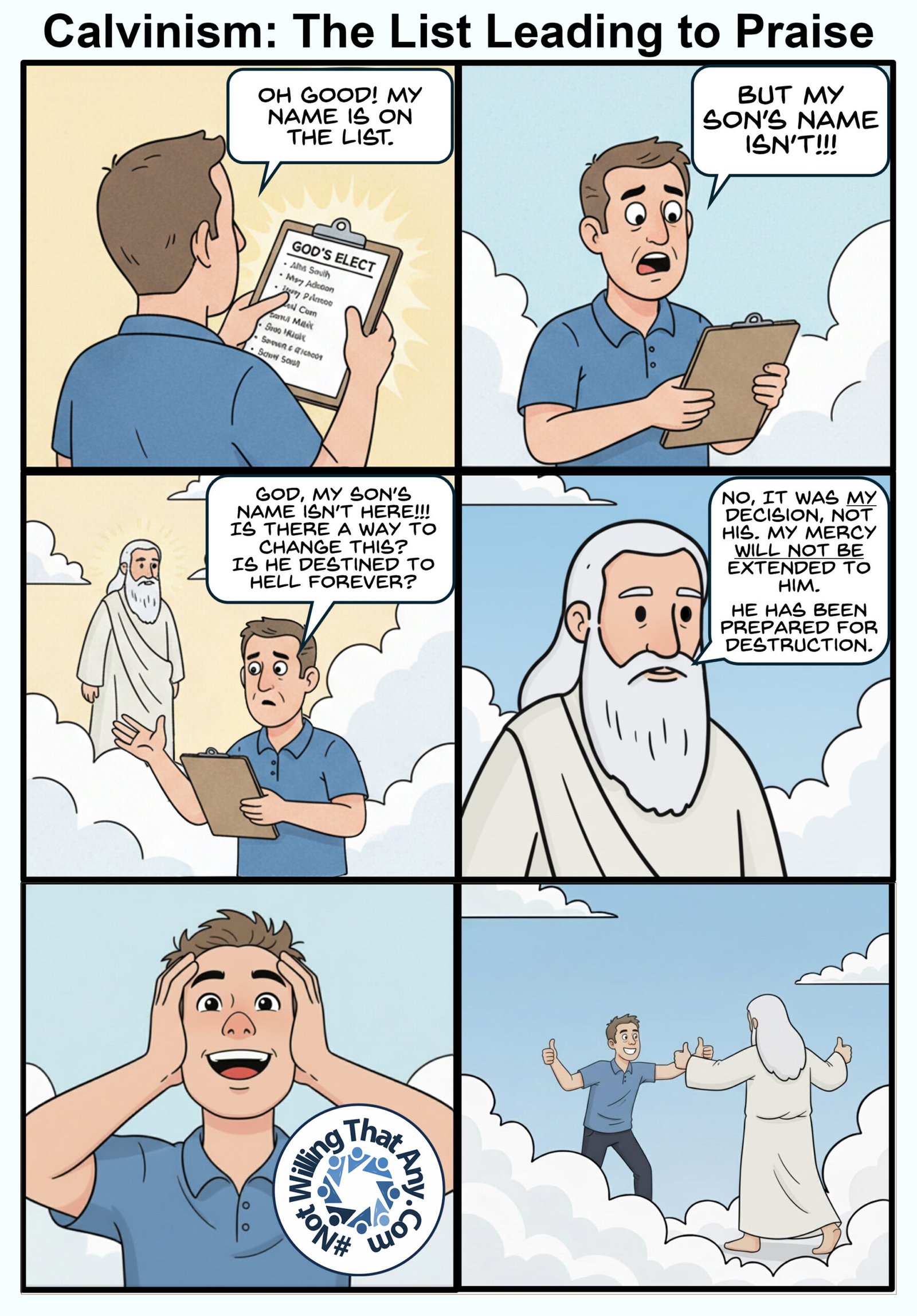
This illustration forces that question out of theory and into real life. The father learns that his own salvation is secure, but his son’s fate is fixed and cannot be changed. In the final panels, the response is not grief or protest, but relief and praise. The image asks whether joy rooted in selective mercy still looks like the kind of praise Scripture calls good.
Is it an accurate picture of Calvinism?
This illustration is not meant to mock Calvinism, but to show its claims clearly and honestly. The language and ideas come straight from common Reformed teaching about election, mercy, and divine decision. The goal is to take the doctrine seriously enough to picture how it works in a real family.
Unconditional Election (U)
The list represents unconditional election. The father’s name is included without explanation, while the son’s name is missing with no chance of appeal. This reflects the Calvinist belief that God’s choice comes before any human response and is not based on future faith or actions (Romans 9:15–16).
Selective Mercy (L)
The words “mercy will not be extended to him” show that grace is given to some and withheld from others. The son is not simply allowed to continue in sin but is described as being prepared for destruction. This matches how Romans 9:22 is often used to explain non election as part of God’s plan, not an accident or oversight.
Praise as the Expected Response
The final panels matter most. The story ends with relief, happiness, and shared approval between God and the father. This reflects the claim that election should lead believers to gratitude and praise. The illustration asks whether praise still feels right when it depends on accepting a child’s unchangeable condemnation.
If this picture truly reflects Calvinist theology, the question is not whether it is consistent, but whether it fits the character of God revealed in Scripture. When the doctrine is seen this way, is this a view of grace that produces the right kind of worship, or does it raise concerns that should not be ignored?
The Backstory
This illustration grew out of thoughtful conversations with Calvinists following an earlier post: https://notwillingthatany.com/calvinism-the-list/. In those discussions, some suggested that a father in this situation would not respond with grief, but with rejoicing rooted in confidence in God’s sovereignty. This image was created to reflect that claim visually and to continue the conversation in a concrete way. While questions may arise about why this illustration was made, it comes from a sincere and good faith effort to engage those interactions and think carefully about what these theological commitments look like when applied to real relationships.