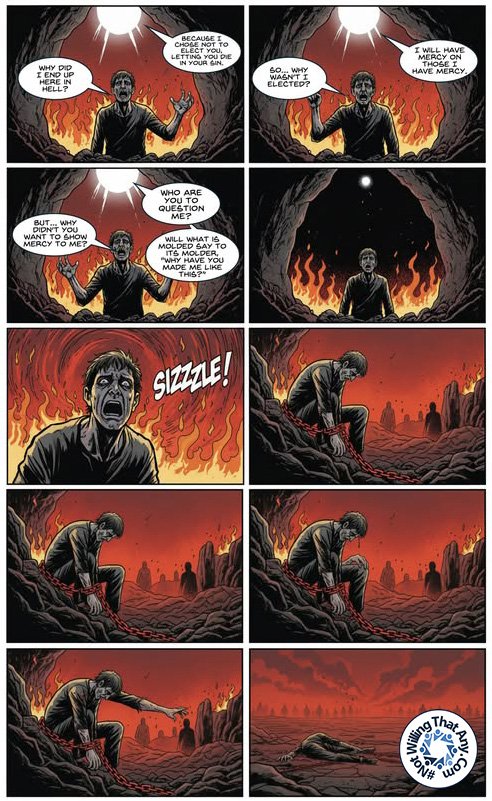
This illustration is meant to work from inside the Calvinist system, not against it. It assumes the doctrines are true and allows their conclusions to speak plainly. The purpose is not to accuse, but to slow down and look carefully at what those conclusions mean when followed all the way through.
Total Depravity
The man is not shown as innocent. He is guilty, sinful, and responsible for rejecting God. His condemnation is just. At the same time, his rejection flows from a will that is bound by sin. He could only reject God unless grace first changed his heart. His choice was real and blameworthy, yet impossible to avoid apart from grace. This fits the understanding of total depravity often grounded in Ephesians 2:1–3, Romans 3:10–12, and John 6:44. The illustration simply holds that logic still long enough to let it be seen.
Unconditional Election
Mercy is shown as selective and unexplained. The man’s fate is not tied to his actions, desires, or faith, but to God’s sovereign choice alone. Election is unconditional. God chooses some and passes over others according to His will, not anything found in the individual. This aligns with Romans 9:11–18 and Ephesians 1:4–5. The illustration does not challenge the doctrine. It places its outcome in plain view.
Irresistible Grace and Passing Over
Those who receive saving grace will certainly come. Grace cannot fail. Those who do not come are left in their sin and are judged for it. The man is not shown fighting God, but left bound and silent. If grace is irresistible when given, then not receiving it determines everything. Passages like John 6:37, John 10:26–29, and Romans 8:29–30 are often used to support this certainty. The illustration simply shows what that certainty looks like from the other side.
The question now rests quietly. If this picture truly reflects the system as it stands, does it feel faithful to the God revealed in Scripture? Not just logically consistent, but morally and relationally true to His character. When mercy is withheld by design and judgment is certain from the beginning, is this the God being proclaimed, or does the image reveal something that deserves deeper reflection?