
Quick Take:
What if this image isn’t trying to mock Calvinism but to ask whether it shows the doctrine the way it actually works?
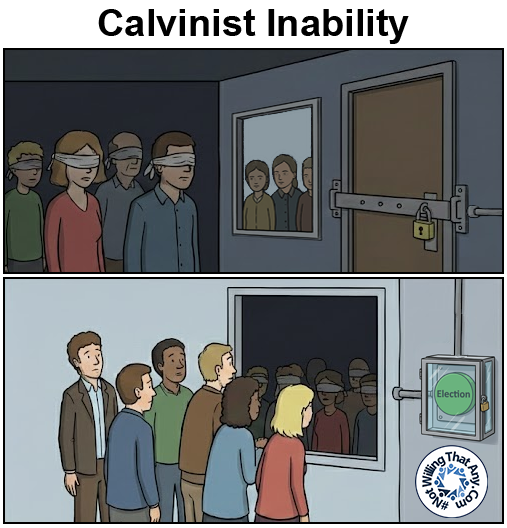
The blindfolds labeled total depravity capture the claim that those inside are unable to see or respond, while the locked door makes clear that release does not originate from within them. The button outside shows that salvation is real and possible, yet its application depends entirely on an external decision rather than a response to light or opportunity. The elect standing outside are not portrayed as cruel, but as beneficiaries of a release they did not initiate and do not extend. The illustration presses on a single question: if this accurately reflects Calvinist inability, does it present a picture of salvation you find coherent and faithful to God’s revealed character?
Is it an accurate picture of Calvinism?
Any illustration has limits, and no picture can capture every qualification or careful explanation Calvinists would want to add. Still, this image is meant to honestly reflect the main claims Calvinism makes about sin, salvation, and grace, not to distort them or argue against them. With that aim in view, the question is not whether the illustration says everything Calvinism says, but whether it shows the core ideas in a way Calvinists themselves would recognize.
Total Inability:
The blindfolds labeled total depravity reflect the Calvinist belief that people are spiritually unable to see or respond to God on their own. The problem is not a lack of information, but a sinful condition that prevents a saving response (Ephesians 2:1–3; 1 Corinthians 2:14; John 6:44).
God Alone Saves:
The locked door and the release being outside the room represent the Calvinist view that salvation is entirely God’s work. People do not initiate their rescue. God acts first by changing the heart, and faith follows as the result of that work (John 1:12–13; Ezekiel 36:26–27; Titus 3:5).
Selective Grace:
The release button exists but is not used for everyone. This aligns with the Calvinist belief in election, that God chooses to save some and not others, even though He has the power to save all (Romans 9:15–18; Romans 8:29–30; Ephesians 1:4–5).
Who the Elect Are:
The people outside the room without blindfolds represent the elect. Their difference is not based on better choices or greater openness, but on God’s prior decision to give them new life (John 10:26–29; Acts 13:48; 2 Timothy 1:9).
If these elements do reflect what Calvinism teaches about inability, election, and salvation, the invitation is simply to pause and consider what that means. Even allowing for added nuance and careful explanation, does this illustration still capture something real at the heart of the system? And if so, is this a picture of salvation you can sit with and affirm as consistent with the God you believe is revealed in Scripture?