
Quick Take:
Is it an accurate picture of Calvinism?
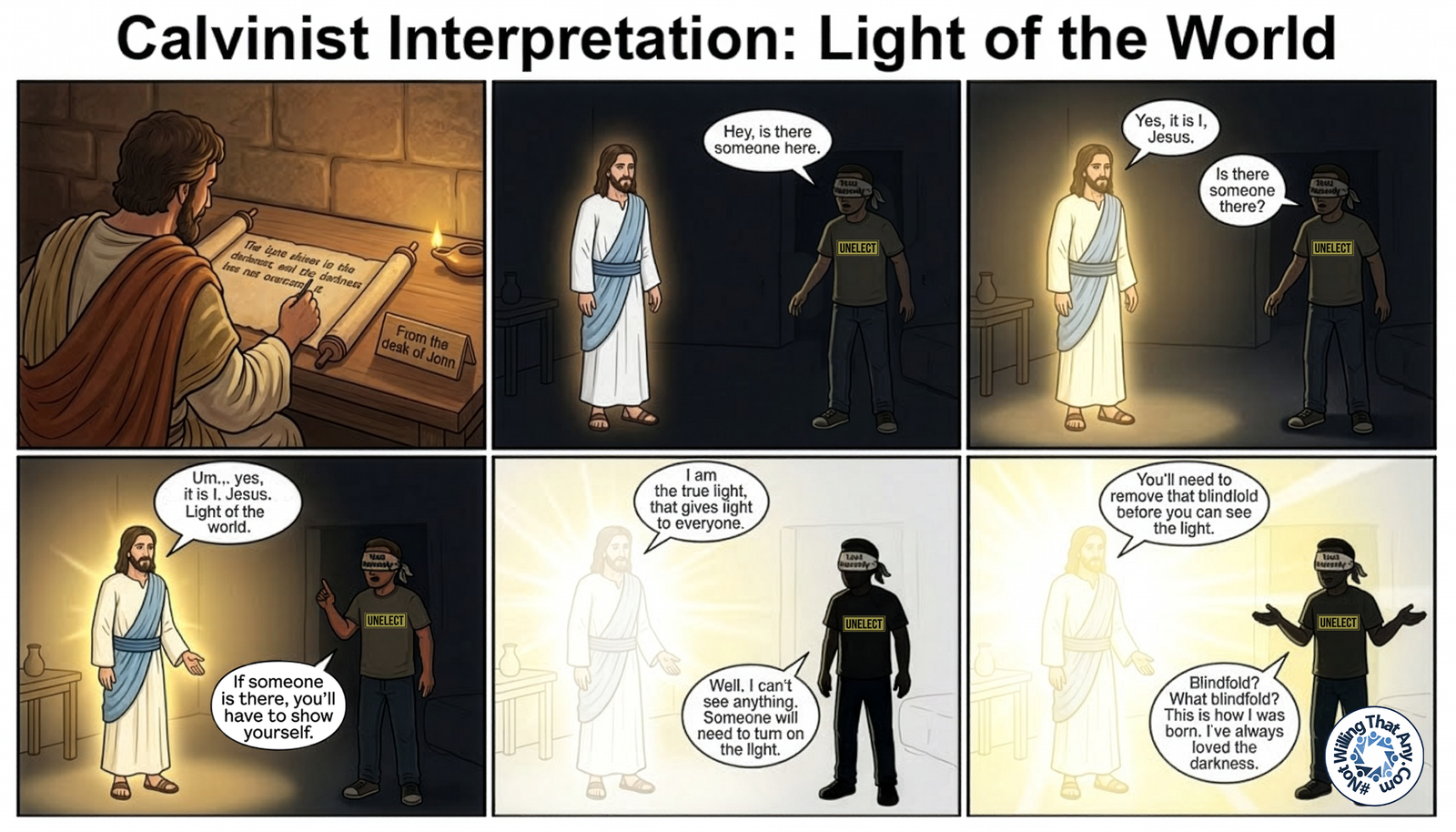
The purpose of this illustration is accuracy, not parody. It is intended to show how Calvinist theology interprets passages about Christ as the Light of the world when its doctrines of depravity, regeneration, and grace are applied consistently. The goal is not to deny the truth of the language, but to depict how Calvinism understands its effect.
Total Depravity: The person in darkness is not merely uninformed but unable to see the light. Darkness is not a lack of illumination but a condition of moral and spiritual blindness. Even when the light is present, it remains ineffective apart from divine intervention (John 3:19–20; Romans 8:7–8).
Moral Inability: The inability to see is not resolved by clearer revelation or greater brightness. The person hears the claim, understands the words, and yet remains unable to respond appropriately. The problem lies in the subject, not the light itself (1 Corinthians 2:14).
External Revelation: Christ truly appears as the Light of the world, shining genuinely and sincerely. The light is real and sufficient in itself, yet its presence alone does not guarantee perception or response by the unregenerate (John 1:5; John 8:12).
Effectual Illumination: Seeing the light requires an additional act beyond revelation itself. Illumination must be granted internally before perception can occur. Until that happens, the light remains present but non-decisive (John 6:44; John 12:39–40).
Regeneration Priority: The removal of blindness precedes any meaningful response to the light. Sight is given before belief, not as a result of it. Faith follows sight rather than producing it (John 1:12–13; Ephesians 2:4–5).
Selective Application: The light shines broadly, but sight is granted particularly. The illustration reflects the Calvinist distinction between the universal proclamation of truth and the particular application of saving grace (John 10:26–28; John 17:9).
Taken together, the illustration does not deny that Christ is the Light of the world or that His revelation is sincere. It shows that within Calvinism, light alone does not enable sight unless accompanied by regenerating grace.
If this is an accurate picture of Calvinist theology, is it one you can accept?